



How to Research Your Family Crest in UK Parish Records: A Beginner's Guide
Trace heraldic clues in parish registers, wills and county archives, and learn when to approach the College of Arms or the Court of the Lord Lyon.
Most searches for a family crest begin with a surname and a hopeful image search. The better route starts with a person, a place and a paper trail. Some of the richest heraldic clues sit in parish registers, probate bundles and county record offices that have been catalogued for decades and are now often searchable online. This guide is for beginners in England, Wales, Scotland and Ireland who want to follow that trail properly, note down what matters, and know when to stop guessing and ask the heraldic authorities.
First, a crest is not the same as a coat of arms
The crest is the small device that sits on top of the helmet in a full heraldic achievement. The coat of arms is the shield itself. Beginners tend to use "family crest" as shorthand for the whole thing, which is fine in conversation but unhelpful when you are searching, because arms belong to individuals and pass down by inheritance. There is no coat of arms attached to a surname.
Two families called Harper, one in Devon and one in Fife, may hold completely unrelated arms, or none at all. So the aim of your research is not to find "the Harper crest". It is to find an ancestor who genuinely used arms, or to establish that none in your line did. Both are real answers, and the second one saves you a lot of money on mugs.
Start with a person, not a surname
Pick one ancestor you can name, with an approximate date and a parish. Work backwards from there: civil registration from 1837 in England and Wales, 1855 in Scotland and 1864 in Ireland, then the census returns, then parish registers for anything earlier. At each stage, write down occupations, addresses and any description of status. Those small words are where heraldry leaves its fingerprints.
Reading parish registers for heraldic clues
Parish registers began in England and Wales in 1538, and from 1598 clergy were meant to send annual copies to the diocesan bishop. Those bishops' transcripts sometimes survive where the original register does not, so check both. Baptisms, marriages and burials are the core, but the margins and the wording carry the detail.
- Status words. "Gent.", "esquire" and the Latin armiger suggest a family claiming arms. "Yeoman", "husbandman" and "labourer" suggest they did not, though the line may rise later.
- Burial place. A burial inside the church, especially in the chancel, usually marks rank, and rank often means a memorial with a coat of arms on it.
- Occupation and office. Rector, justice of the peace, captain, merchant, apothecary: these are the people most likely to have owned a seal matrix or commissioned a monument.
- Abodes. A named house or manor gives you something to trace in estate, manorial and tax records.
- Marginal notes. Later vicars sometimes recorded that a hatchment was hung or a window repaired. Those notes point to surviving armorial glass, brasses or wall monuments.
A burial entry might read: "1683, April 4. John Fletcher, gent., of Ewehurst, buried in the chancel." That single line gives you a status, a property and a place to look for a monument.
Wills and probate: seals, status and small signs
Before 1858, wills in England and Wales were proved in church courts. The Prerogative Court of Canterbury is the best known, but most people went through a diocesan or archdeaconry court, and the indexes for those are held in county record offices. From 1858, search the calendars of the Principal Probate Registry. In Scotland, look to the commissary courts and later the sheriff courts, with records at the National Records of Scotland.
Wills are useful for two reasons. The wording tells you how a person described themselves, and the physical document may still carry a wax seal. Armorial seals survive surprisingly often, even when the will itself is a faded copy. Look for bequests of a "seal ring", a "gold ring", a "picture" or "my books", and note the witnesses and overseers, who are often relatives.
Where a seal is intact, ask the archive to let you photograph it with a scale bar, and check the catalogue for any description already recorded. A lion rampant, a chevron between three hinds, or a merchant's mark can all be compared against published blazons later.
Archives, visitations and the church itself
County record offices, local studies libraries and The National Archives at Kew hold the next layer: manorial court rolls, deeds, estate papers, marriage settlements and tax returns. Search The National Archives' Discovery catalogue first, then the individual archive's own catalogue, because coverage varies.
Do not overlook the Heralds' Visitations, the tours of the counties between roughly 1530 and 1687, where officers recorded pedigrees and arms. Many are published, often by the Harleian Society, and they are indexed by surname and place. Treat them as leads rather than proof: families did embellish.
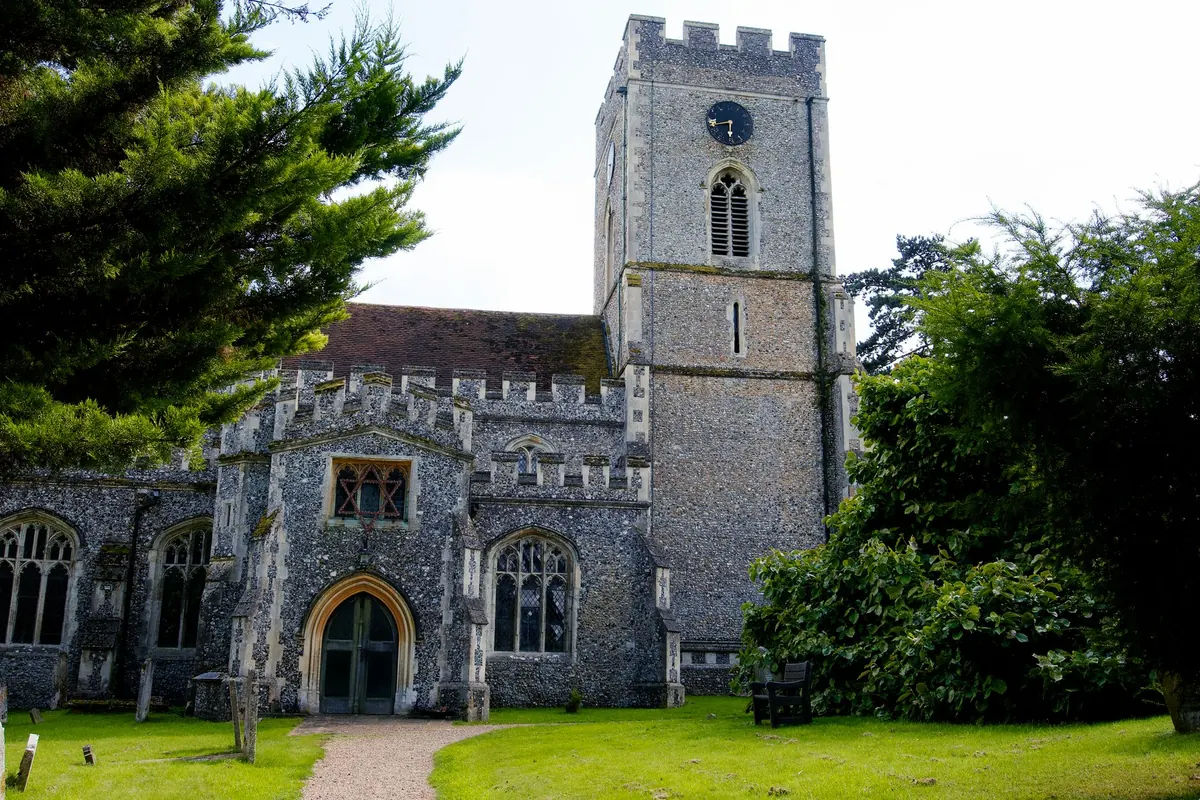
Then visit the church. Look for brasses, wall tablets, funeral hatchments, stained glass and carved bench ends. Take photographs, note the location, and record what you see in plain words before you try to blazon it.
When to ask the heraldic authorities
If your research points to an ancestor who used arms, the relevant authority can confirm it. The College of Arms covers England, Wales and Northern Ireland; the Court of the Lord Lyon covers Scotland; the Chief Herald of Ireland covers Irish arms. Each holds records and answers enquiries, usually for a fee, and each has its own way of working, so check its website before you write.
Remember that in Scotland, arms are protected by law and are used only with the Lord Lyon's authority. If you are thinking about using a design publicly, take advice from the relevant office rather than from a retailer selling "surname crests" on demand.
A practical first week
- Write down everything you already know about one ancestor, with sources.
- Identify the county and parish, and find the record office that holds its registers.
- Search free indexes first, then the main genealogy sites, and download the images rather than relying on transcripts.
- Transcribe each entry in full, including status words and marginal notes.
- Order or download wills for every adult in the family, and check the seals.
- Keep a research log with dates, catalogue references and what you have ruled out.
- Photograph every monument, brass and armorial window you can reach.
Do this for one generation at a time and the picture builds. You will end up with either a documented heraldic connection worth confirming with the College of Arms or the Court of the Lord Lyon, or a clear answer that your line used no arms. Either way, you will know far more about your family than a surname search could ever tell you.
Photo: Mike Bird / Pexels